
Short answer: yes — but not in the way headlines often suggest.
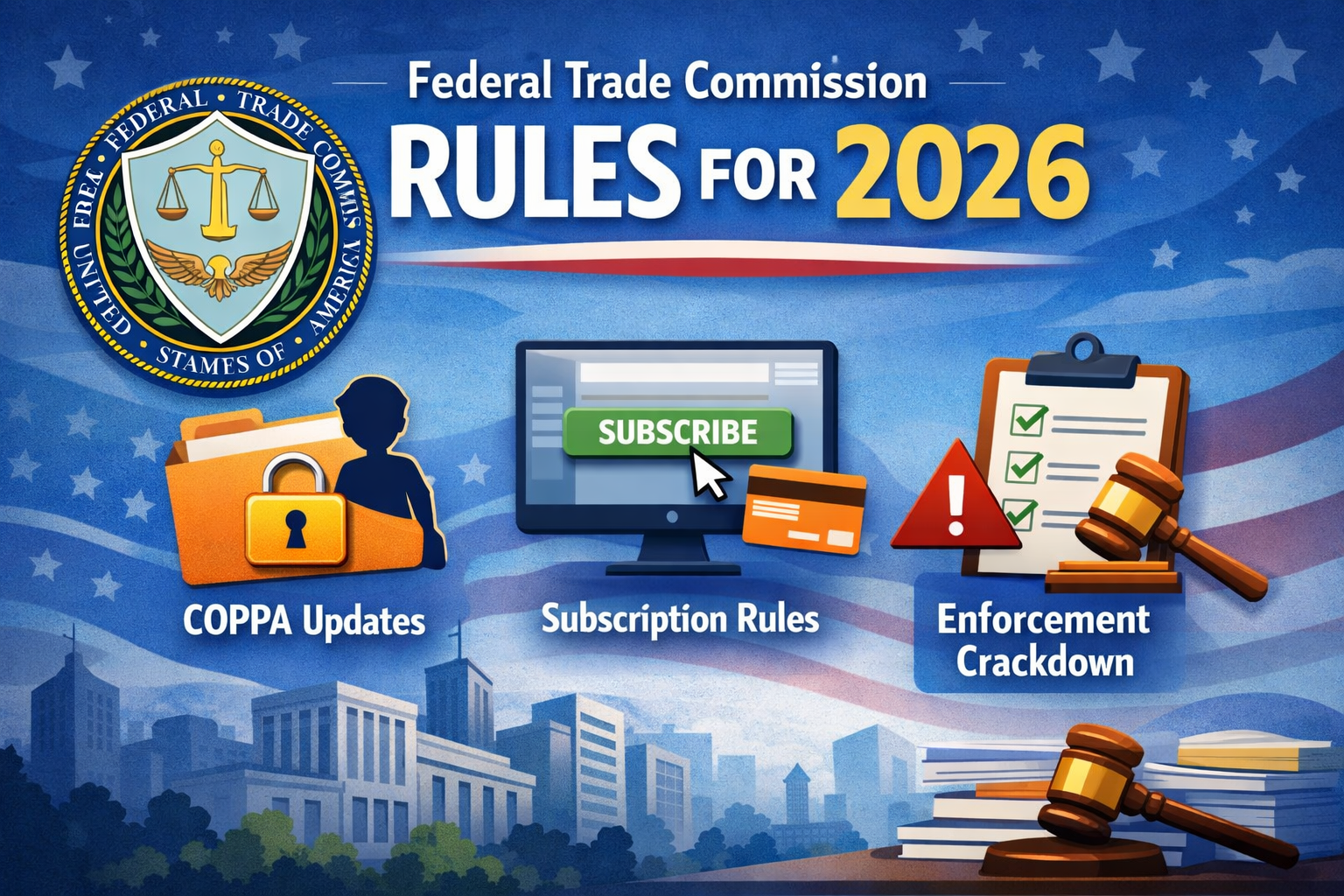
There isn’t a single sweeping “new FTC privacy law” taking effect this year. Instead, 2026 brings a mix of updated FTC rules, expanded enforcement priorities, and clearer expectations that directly affect how websites collect data, obtain consent, and interact with users.
For small businesses, agencies, and SaaS operators, this is less about panic—and more about tightening the basics.
The Biggest FTC Change to Know About: COPPA Updates
The most concrete FTC rule affecting websites in 2026 is the updated Children’s Online Privacy Protection Act (COPPA) Rule, finalized recently and now taking effect.
These updates modernize COPPA to reflect how websites and apps actually operate today, particularly around:
- What qualifies as personal data
- How consent is obtained
- How long data can be retained
- How third parties are disclosed
Who This Affects
You don’t need to be a “kids website” to be impacted.
If your site or service:
- Is directed at children under 13, or
- Collects data from users who could reasonably be children (games, education tools, family apps, certain communities)
…you need to review your privacy disclosures and consent flows carefully.
The FTC has made it clear that assumptions are no longer enough. If children’s data is involved, documentation and intent matter.
Subscription & Billing Transparency: The FTC Is Watching Closely
Another major compliance area gaining traction is subscription transparency, governed by the FTC’s Negative Option Rule.
This rule targets:
- Auto-renewing subscriptions
- Memberships
- Free trials that convert to paid plans
- SaaS billing models
While refinements are still being finalized, enforcement expectations are already clear:
- Users must clearly understand what they’re signing up for
- Consent must be explicit
- Cancellation must be easy—not buried or obstructed
For websites with recurring billing, this is one of the highest-risk compliance areas right now.
Enforcement Is the Real Story in 2026
Even where no brand-new rule exists, the FTC has made one thing clear:
enforcement is increasing, especially around deceptive practices.
This includes:
- Misleading privacy policies
- Dark patterns in consent banners
- Confusing opt-out mechanisms
- Inconsistent data handling versus what’s disclosed
The FTC doesn’t need a brand-new statute to act. Existing authority under unfair or deceptive practices is enough—and it’s being used.
What This Means for Website Owners
The takeaway isn’t fear. It’s focus.
In 2026, compliance success looks like:
- Accurate, plain-language privacy disclosures
- Honest consent mechanisms
- Clear subscription terms
- A documented process for user data requests
- Alignment between what your site says and what it does
Most enforcement actions don’t target good-faith operators who make reasonable efforts. They target negligence, misrepresentation, and intentional friction.
The Bottom Line
There’s no single FTC rule that suddenly makes most websites “non-compliant” this year.
But there is a clear shift:
- Toward stronger children’s data protections
- Toward transparency in subscriptions and billing
- Toward enforcement over warnings
For most websites, this isn’t about adding more tools—it’s about getting the fundamentals right and being able to show your work.
That’s exactly where a practical, documented compliance approach pays off.